Zines as civic engagement
At this year's Object//Project Art Book Fair, presented by Possible Worlds, I gave a talk about my journey so far as a journalist and zine-maker. Although I was incredibly nervous, preparing for the talk was so satisfying because I was finally compiling all the thoughts and values I'd been relishing in while creating and working on Mid City.
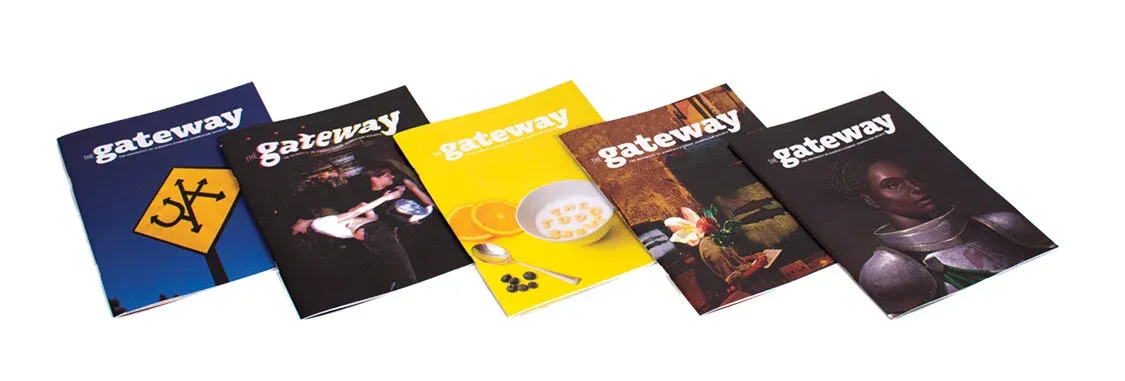
My interests in journalism and magazine publishing started in high school, when I still lived in Edmonton, Alberta. I was especially inspired by The Gateway, the University of Alberta's student newspaper.
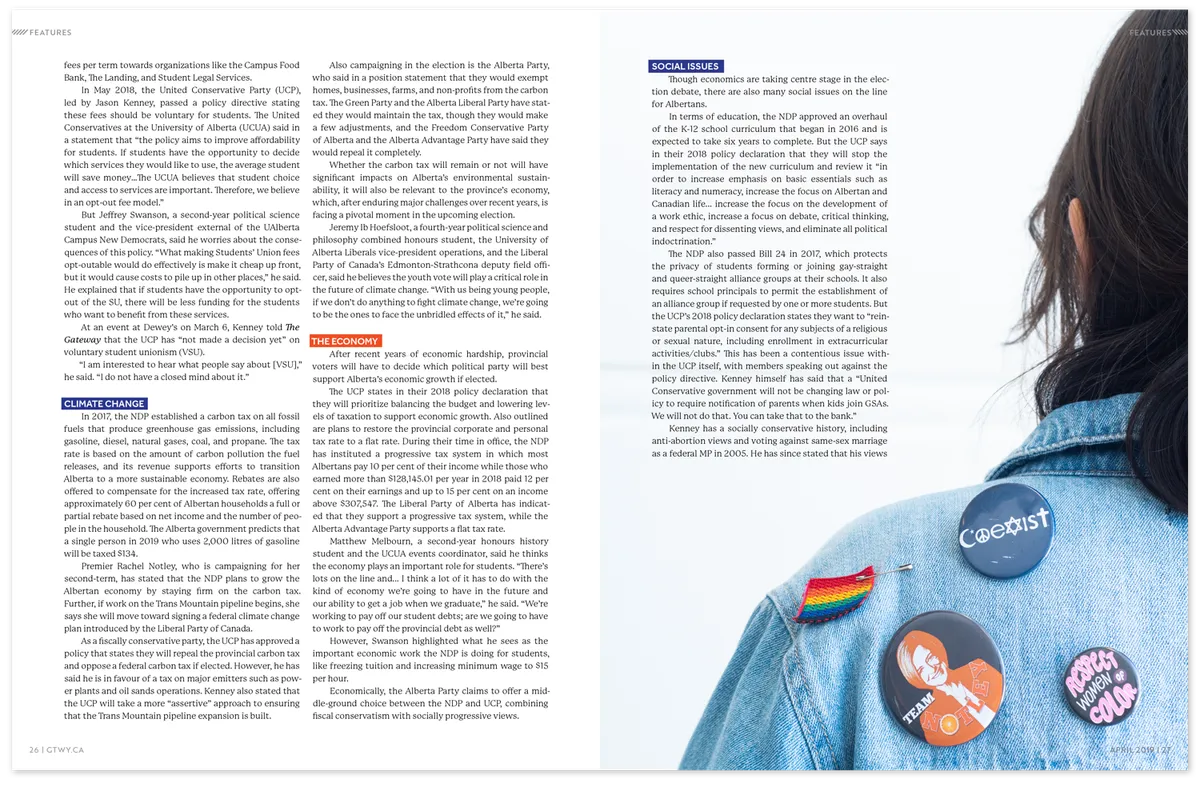
At the time, it was printed as a magazine and I loved how they spotlighted incredible design and visual storytelling, without sacrificing the content, the reporting. Their magazine covers were playful and colourful, but so were the inside pages. I loved the creativity and how a news article could become something bigger. It could present facts and information, but it could also be artistic, fun, and visually engaging.
The examples below are from Jessica Tang's portfolio, a graphic designer in Edmonton who was designing for The Gateway when I was busy collecting every issue I could find.
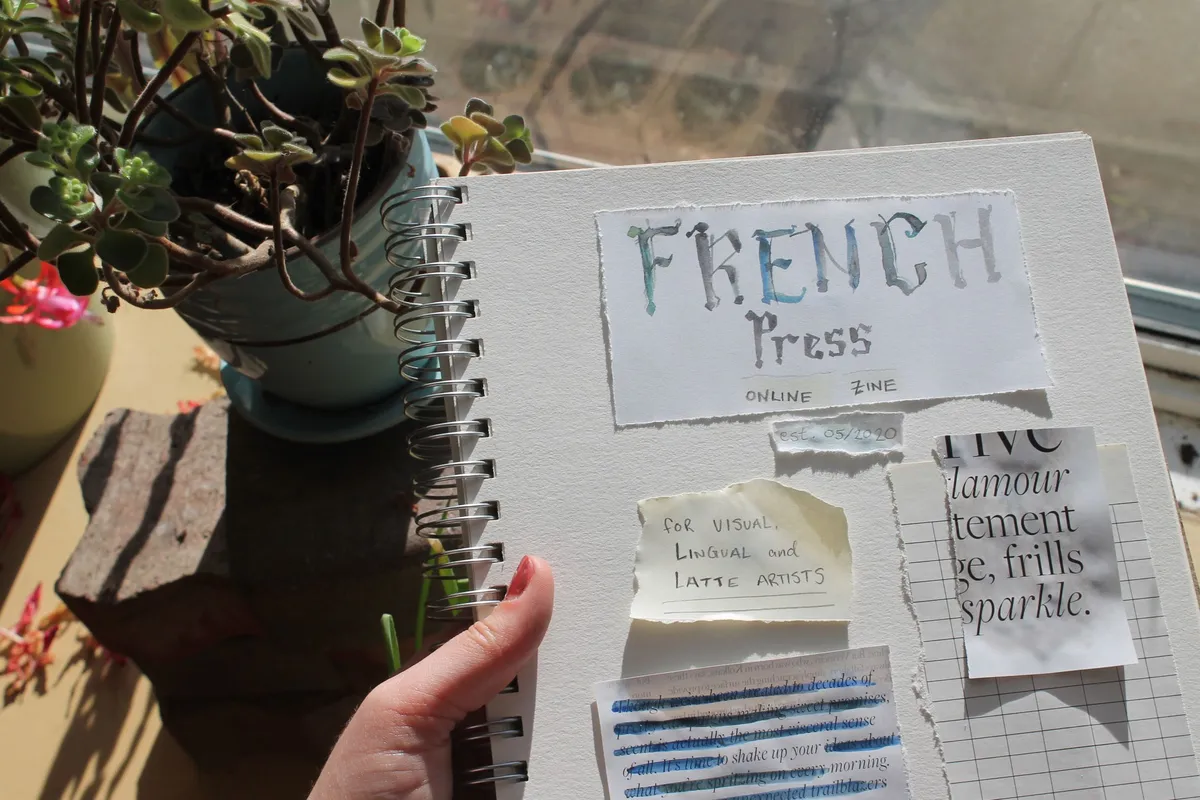
In 2020, when I was jobless and fresh off my first year in journalism at Carleton University, I started a zine called French Press.
I'm not sure exactly how I learned about zines, but I could see how they could be such an empowering medium. My goal with French Press was to inspire myself, and others, to exercise our creativity.
Zines are easy to produce and distribute. They can be as simple as ink on paper, or complicated and playful. They have unlimited potential without a barrier to entry.
In these early days, making French Press, my main goal wasn't to make a sellable product, although I did sell a few copies to friends and contributors. Instead, my goal was to empower creativity through the process. To create an avenue for sharing art and a reason to make art.1
This idea of empowerment continues in my work today. I love how zines can be used to inspire action and conversation. I love how they can be a tool for something bigger.
Stepping into journalism
Inspired by The Gateway and my brief stint in the City of Edmonton Youth Council, I started journalism school in 2019 at Carleton University and moved to Ottawa.
In the classroom and while working on assignments, I developed my values as a journalist, which in turn shaped my art and zine-making.
I can pinpoint a few key conversations we were having over and over again that played a critical role in shaping my values.
The question of objectivity in journalism
How the journalism ecosystem is shifting and shrinking
That all news is bad, sad, and overwhelming
Striving towards objectivity
Journalists can't help but be biased. We're people with feelings, backgrounds, and opinions. Our identities and biases leak into the stories we write. It impacts who we pick to interview and how we talk about current events. It shapes our editorial decisions, like what stories we prioritize and which fall to the back burner.
I think there's a lot more harm in hiding our biases than in being open and transparent. If I'm clear about my opinions and my priorities, my readers can better understand my reporting. They can find ways to balance their media diet if they know where I fit in the political spectrum.
By claiming objectivity, journalists are expected to present balanced stories, but forcing balance is dangerous. The classic example from school was:
If you're reporting on climate change, should you interview a climate change denier to make sure the story is balanced?
The answer is, no.2
Another example is evident is some publications' reporting on Palestinian stories. In an effort to seem balanced, journalists include an Israeli voice, whether or not it makes sense for the story. This kind of "bothsidesing" skews perspectives and fails to present a clear picture of realty.
Shifting ecosystems and the future of journalism
Another hot topic in class was the shifting news ecosystem, especially as we were getting closer to graduation and closer to entering the (failing? struggling?) industry. Think about how newsrooms are shrinking and social media is taking over.
Despite the dismal state of journalism, we talked about innovation. If the tides are turning, how can the industry adapt?
That's when my gears really started spinning about how I could contribute to the journalism ecosystem, especially locally. What kind of journalism do I want to see?
I was inspired by publications and journalists using social media and crowdfunding platforms to support their reporting. Instead of leaning on longstanding institutions and massive media conglomerates, they're working independently and building something of their own.
Slow journalism
I first heard about "slow journalism" through The Sprawl, a local Calgary publication. Slow journalism is part of their 11-point manifesto.
"We do context, not clickbait. The Sprawl is a local riff on a global movement toward “slow journalism”: nuanced, high-quality, curiosity-driven reporting for people who want more than the daily news grind. We ask: How can our journalism deepen Calgarians’ understanding of their city?" The Sprawl
Slow journalism is a response to the quick, snappy reporting that fills most of our feeds and often skips over nuance and context.
I think this approach has a lot of power, especially when combined with print publishing and zine-making--so it was no surprise to me that a few years ago, The Sprawl started incorporating zines into their portfolio alongside their podcast and digital publishing.
How to stave off misery
The third conversation that shaped my journalistic values was about the overwhelming negativity in everyone's news feeds.
People are overwhelmed by the news. They're tired of the endless disappointment, war, genocide, and fear they see in the news everyday.
That kind of news feed is suffocating. It makes people feel hopeless and it pushes them to disconnect, first from the news and current events, but then they pull away from their community. I've seen this in friends of mine, but also in myself.
To combat the doom and gloom, I've seen some journalists and writers focus on bringing more good news into people's feeds.
Our algorithms reward negativity and anger over happy stories, so it's a worthy effort to continue pushing good news stories even when you're not going to get as many clicks or as much visibility.
That's important, but I also think we can shift how we write news to not JUST report the facts but also encourage action. I think we should report on politics AND bring people into it. We should show people how they can get involved and use their voice.
To me, journalism is about empowerment.
The journalism I want to do empowers readers to make informed decisions, to better understand the world and what's going on around them. It encourages people to participate more wholeheartedly in democracy.
Empowering journalism brings people into politics--whether that's getting people to vote, email their MPPs, get involved in organizing, letter writing, signing petitions, or starting a community garden. Maybe they decide to join a political party or just talk about the lastest Doug Ford scandal with their family or coworkers.
There are levels of participation and all of it is better than disengaging entirely.
Zines 🤝 journalism
All of this empowerment brings me back to zines, the perfect medium to platform my journalistic efforts!
Mid City is my bi-monthly zine series covering local Ottawa news and municipal politics. It has illustrations and bubble letters and comics. It covers some of the latest news from city hall, from Lansdowne 2.0 to the new 2026 city budget. All in an effort to make city politics more digestible, interesting, and accessible.
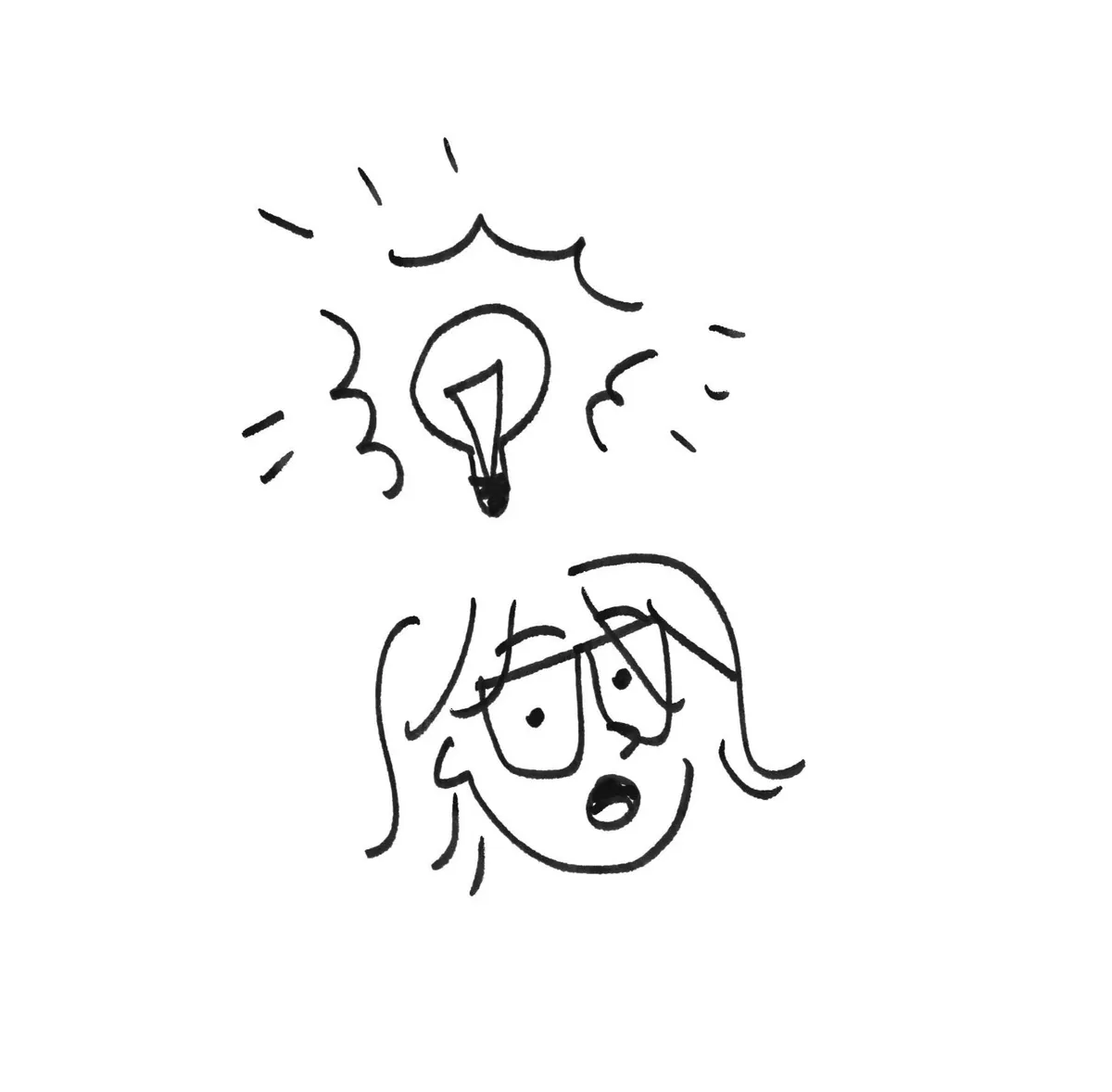
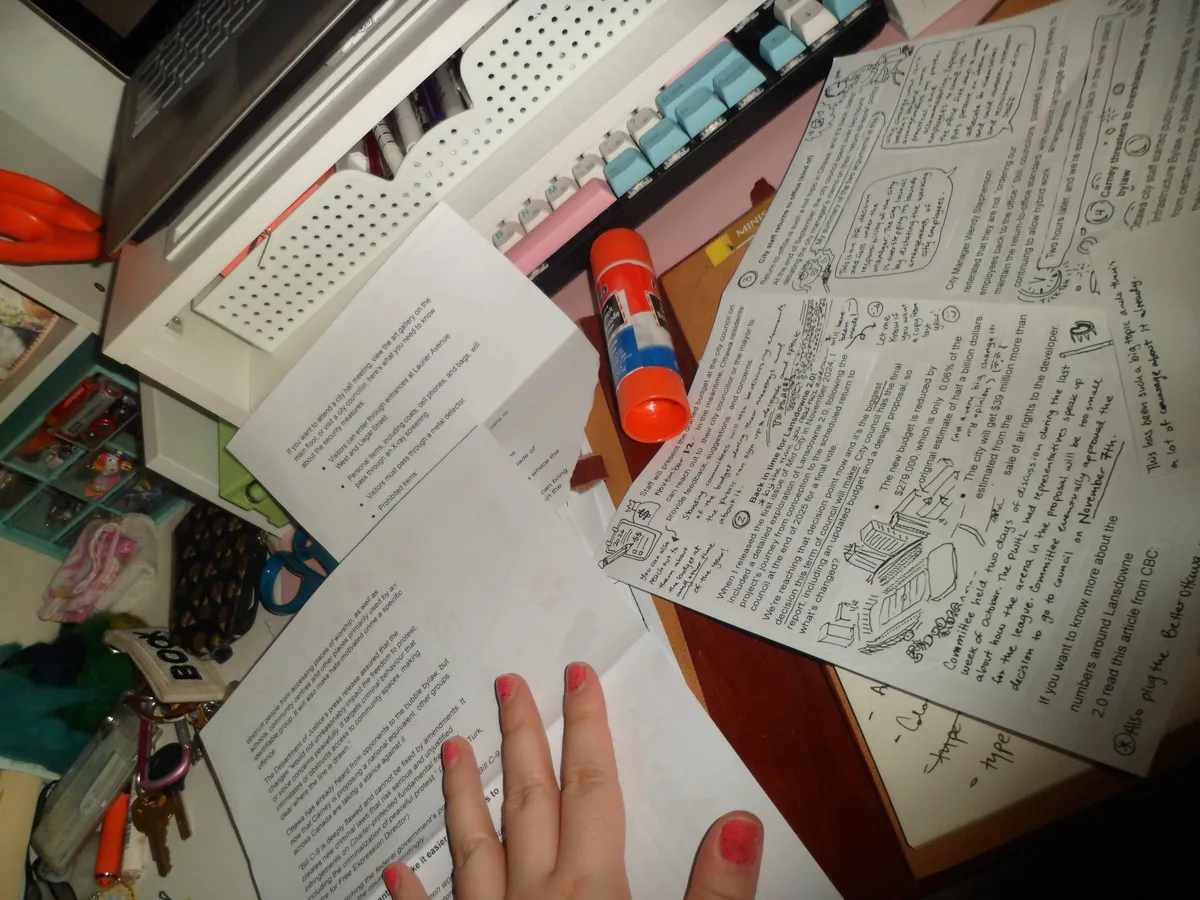
I have a handful of paid subscribers and I sell copies at zine markets, but I mostly distribute for free across the city. It's fun to hear from people who search the city to get their hands on the latest copy, but I chose this distribution system primarily because I want new people to find it and learn about what's happening in their city.
I don't want to pretend Mid City is revolutionary. Ottawa is lucky to have MANY neighbourhood newspapers that I think have a similar impact. They're up close and personal, and that's what I'm trying to do.
I love, love hearing from readers who learned something new and were inspired to pay more attention to city and community around them, but through this project, I'm also empowering myself to stay engaged, continue learning, and be playful.
There are no rules for Mid City except for the rules I make for myself.
Stay in touch!
If you're interested in Mid City, I would love to hear from you! You can join my email newsletter to get the latest updates about delivery locations and upcoming events.
❤️ Support me on Ko-Fi and get Mid City in the mail!
French Press has some printed issues, but it was primarily online via Tumblr. My old blog still exits and it's a fun archive.↩
I hope that's obvious, lol.↩